In the chemical industry, pump equipment is responsible for transporting corrosive media such as strong acids, strong alkalis, and organic solvents. As a core protective component of chemical pumps, the sealing system is directly related to the stability of equipment operation and production safety. Corrosive media are prone to causing swelling, aging, wear, and other damages to seal components. Conventional mechanical seals often struggle to adapt for long-term operation, while corrosion-resistant cartridge mechanical seals for chemical pumps, with targeted material selection and structural design, have become a core solution to address sealing challenges in corrosive operating conditions. From a professional popular science perspective, this article analyzes the working logic, core selection criteria, operation and maintenance key points, and failure prevention measures of corrosion-resistant cartridge mechanical seals for chemical pumps, providing references for equipment operation, maintenance, and procurement in the chemical industry.

I. Core Challenges of Chemical Pump Sealing: Damage Mechanisms of Corrosive Media on Sealing Systems
Most media transported by chemical pumps are highly corrosive, volatile, or oxidizing. The damage caused by such media to sealing systems mainly manifests in three aspects: first, chemical corrosion of seal materials by the media, leading to swelling, hardening, or fracture of seal rings, and pitting or spalling on seal faces; second, electrochemical corrosion caused by the combination of corrosive media and mechanical friction, which accelerates seal face wear and reduces sealing performance; third, some media contain solid particles, which exert both corrosive and scouring effects, further shortening the service life of seals. Conventional cartridge mechanical seals, not optimized for corrosive conditions in terms of materials and structure, are prone to early leakage. In contrast, corrosion-resistant cartridge mechanical seals for chemical pumps can effectively resist such damages through material upgrades and structural adaptation.
II. Corrosion-Resistant Cartridge Mechanical Seals for Chemical Pumps: Core Composition and Corrosion Resistance Principles
Corrosion-resistant cartridge mechanical seals for chemical pumps adopt the core design concept of "modular integration + corrosion resistance enhancement". They are fully assembled with components such as rotating rings, stationary rings, corrosion-resistant seal rings, compensation springs, and seal chambers, and pre-commissioned before leaving the factory, eliminating the need for complex calibration during on-site installation. The realization of their corrosion resistance mainly relies on two core designs:
1. Scientific Selection of Corrosion-Resistant Materials
Material adaptation is the foundation for corrosion-resistant cartridge mechanical seals for chemical pumps to achieve anti-corrosion effects. Different corrosive media correspond to suitable material combinations, and the core material selection must follow the principle of "media compatibility + operating condition matching": seal face materials are preferably corrosion-resistant hard materials, such as reaction-sintered silicon carbide (SSiC), silicon nitride (Si3N4), and Hastelloy. Among these, silicon carbide materials have both corrosion resistance and wear resistance, suitable for most acid and alkali media; auxiliary seal ring materials must avoid chemical reactions with the media. For example, perfluoroelastomer seal rings are suitable for strong acidic media, fluororubber seal rings for strong alkaline media, and polytetrafluoroethylene (PTFE) seal rings for organic solvent media.
2. Structural Design Optimized for Anti-Corrosion
The structural design of corrosion-resistant cartridge mechanical seals for chemical pumps focuses on "preventing media penetration and reducing friction corrosion": most products adopt a double-ended seal structure, injecting barrier fluid into the intermediate chamber to form an isolation barrier between the media and the seal components, reducing direct contact between corrosive media and the seal faces; the seal chamber adopts a streamlined design to avoid local corrosion caused by media retention, and optimizes the spring installation position to prevent the spring from being clogged or eroded by corrosive media; some products suitable for high-viscosity corrosive media are also equipped with anti-scaling structures to reduce the corrosion risk caused by media adhesion.
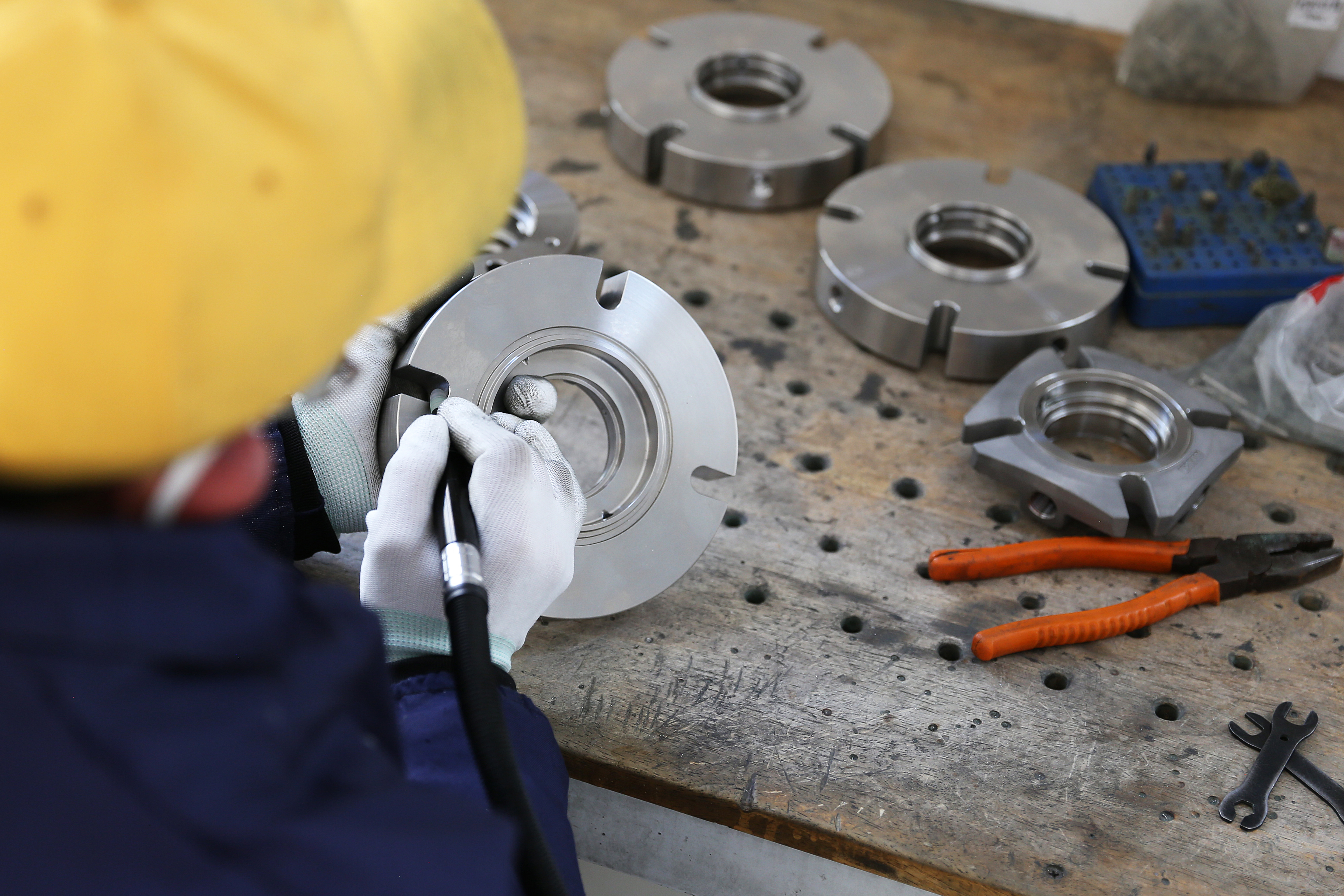
III. Core Selection Criteria for Corrosion-Resistant Cartridge Mechanical Seals for Chemical Pumps (With Selection Table)
Improper selection is a major cause of failure of corrosion-resistant cartridge mechanical seals for chemical pumps. Combined with the media characteristics and operating conditions of chemical pumps, three core dimensions need to be focused on: media compatibility, operating parameter matching, and structural adaptability. The specific selection criteria are shown in the following table:
| Selection Dimension | Core Selection Requirements | Typical Application Scenarios | Notes |
| Media Compatibility | No chemical reactions between seal face/seal ring materials and media; no swelling, corrosion, or aging | Strong acids (sulfuric acid, hydrochloric acid), strong alkalis (sodium hydroxide), organic solvents (methanol, acetone) | Complete parameters such as media composition, concentration, and temperature must be provided; compatibility tests should be conducted in advance for special mixed media |
| Operating Parameter Matching | Adapt to the rated pressure and temperature of chemical pumps; pressure fluctuations and temperature changes do not affect sealing performance | Low-pressure (≤2.0MPa) and room-temperature, high-pressure (2.0-5.0MPa) and high-temperature (≤200℃) corrosive conditions | Fluctuation ranges of operating parameters must be marked; products with enhanced anti-corrosion structures should be selected for extreme conditions |
| Structural Adaptability | Single/double-ended structure adapts to media volatility and toxicity; installation dimensions match the pump seal chamber | Single-ended for low-toxicity and low-volatility media (dilute alkali solution); double-ended for high-toxicity and high-volatility media (benzene series) | Seal chamber dimension drawings must be provided for the renovation of old chemical pumps to ensure installation adaptability |
IV. Daily Operation, Maintenance and Failure Prevention of Corrosion-Resistant Cartridge Mechanical Seals for Chemical Pumps
Scientific daily operation and maintenance can effectively extend the service life of corrosion-resistant cartridge mechanical seals for chemical pumps and reduce leakage risks. Combined with the continuous characteristics of chemical production, the core operation and maintenance key points and failure prevention schemes are as follows:
1. Installation and Commissioning Specifications
Before installation, check that the seal components have no external damage and verify that the materials are consistent with the selection requirements; during installation, control the shaft runout and coaxiality to avoid uneven force on the seal face due to installation deviation, which may intensify corrosion and wear; during the commissioning phase, run the pump without load, check the seal face temperature and leakage, and put it into load operation only after confirming no abnormalities. Prevent early seal failure caused by improper installation.
2. Auxiliary System Maintenance
For corrosion-resistant cartridge mechanical seals for chemical pumps with a double-ended structure, regularly check the liquid level and purity of the barrier fluid, and replenish or replace the barrier fluid in a timely manner to ensure the effectiveness of the isolation barrier; for equipment equipped with a flushing system, keep the flushing fluid clean, ensure the filtration accuracy meets the requirements (≤3μm), and prevent impurities from entering the seal chamber to intensify corrosion and wear; regularly clean the flushing pipeline to prevent pipeline blockage caused by media crystallization.
3. Regular Inspection and Monitoring
Daily inspections should focus on monitoring the seal face temperature (normal operating temperature ≤80℃) and leakage (no visible leakage), and record changes in operating parameters; regularly disassemble and inspect the seal face wear and seal ring aging status, and replace components in a timely manner if corrosion, swelling, or other issues are found; for intermittently operated chemical pumps, clean the residual media in the seal chamber after shutdown to avoid long-term media retention causing corrosion.
4. Common Failure Causes and Prevention
Common failure causes of corrosion-resistant cartridge mechanical seals for chemical pumps include: incompatibility between materials and media, operating parameters exceeding the adaptation range, failure of the flushing system, and installation deviation. Prevention schemes should be carried out in a targeted manner: conduct media compatibility verification before material selection, timely assess seal adaptability when operating conditions change, regularly maintain auxiliary systems, and strictly install and commission in accordance with specifications.
V. Conclusion
The core value of corrosion-resistant cartridge mechanical seals for chemical pumps lies in providing stable and reliable sealing protection for corrosive operating conditions in the chemical industry. Their performance relies on scientific material selection, optimized anti-corrosion structures, appropriate selection matching, and standardized daily operation and maintenance. In chemical production, reasonable selection and maintenance of corrosion-resistant cartridge mechanical seals for chemical pumps can effectively reduce leakage risks, ensure production continuity, and reduce equipment maintenance costs and safety hazards. It is hoped that the popular science analysis in this article can help equipment operation, maintenance, and procurement personnel in the chemical industry gain a clearer understanding of the core points of such seal products and provide professional references for the sealing adaptation of chemical pumps under corrosive operating conditions.


