
Views: 0 Author: Site Editor Publish Time: 2026-03-26 Origin: Site


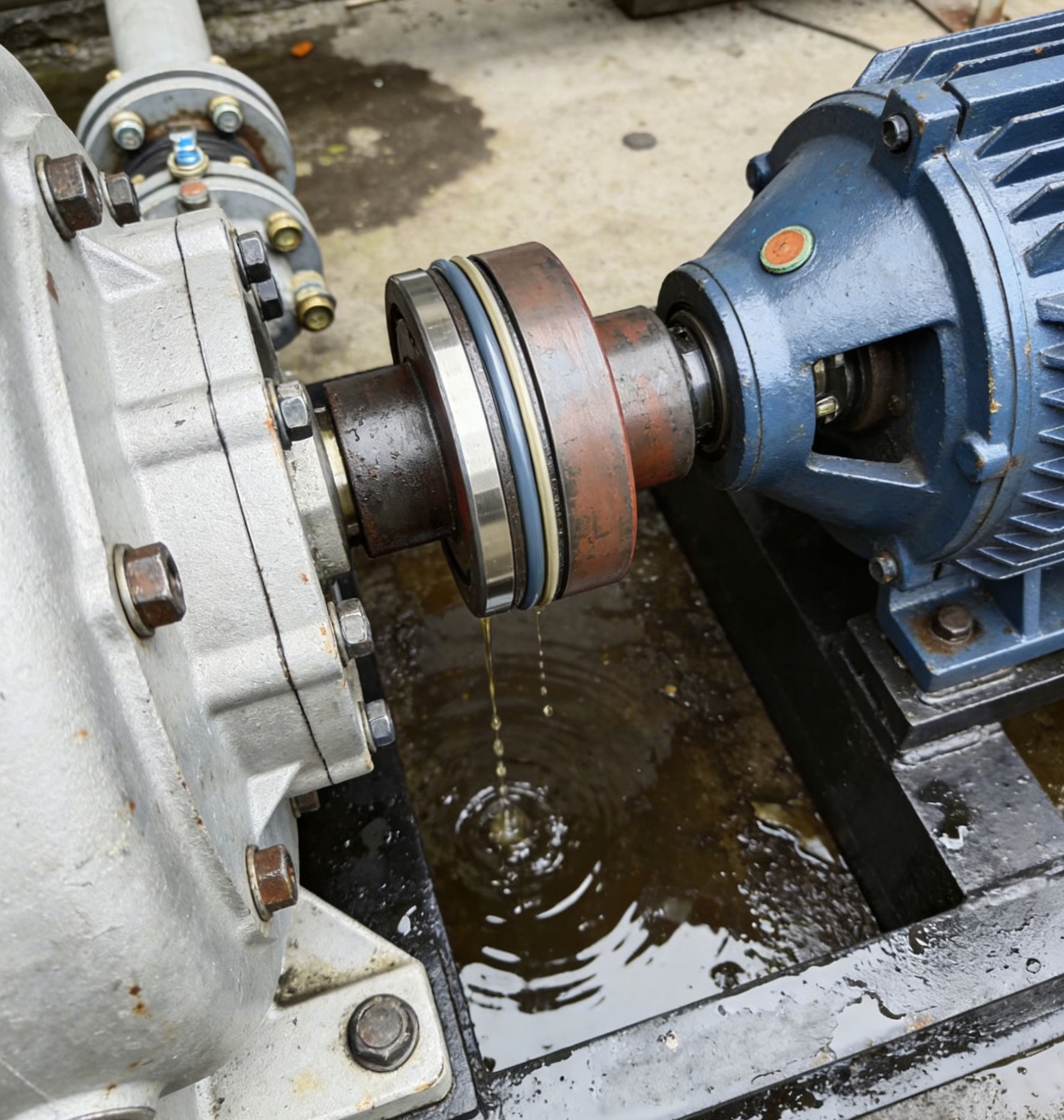
Mechanical seals belong to axial end-face dynamic seals, and their sealing system is a multi-point collaborative sealing structure, not a single sealing surface acting independently. Combined with the characteristics of the seal structure, the probability of on-site leakage and the logic of fault disposal, the leakage of mechanical seals is divided into three core parts: primary seal face leakage, secondary seal point leakage, and gland and fastener joint leakage. Among them, primary seal face leakage is the most frequent type and the core leakage point that is easily misjudged on site.
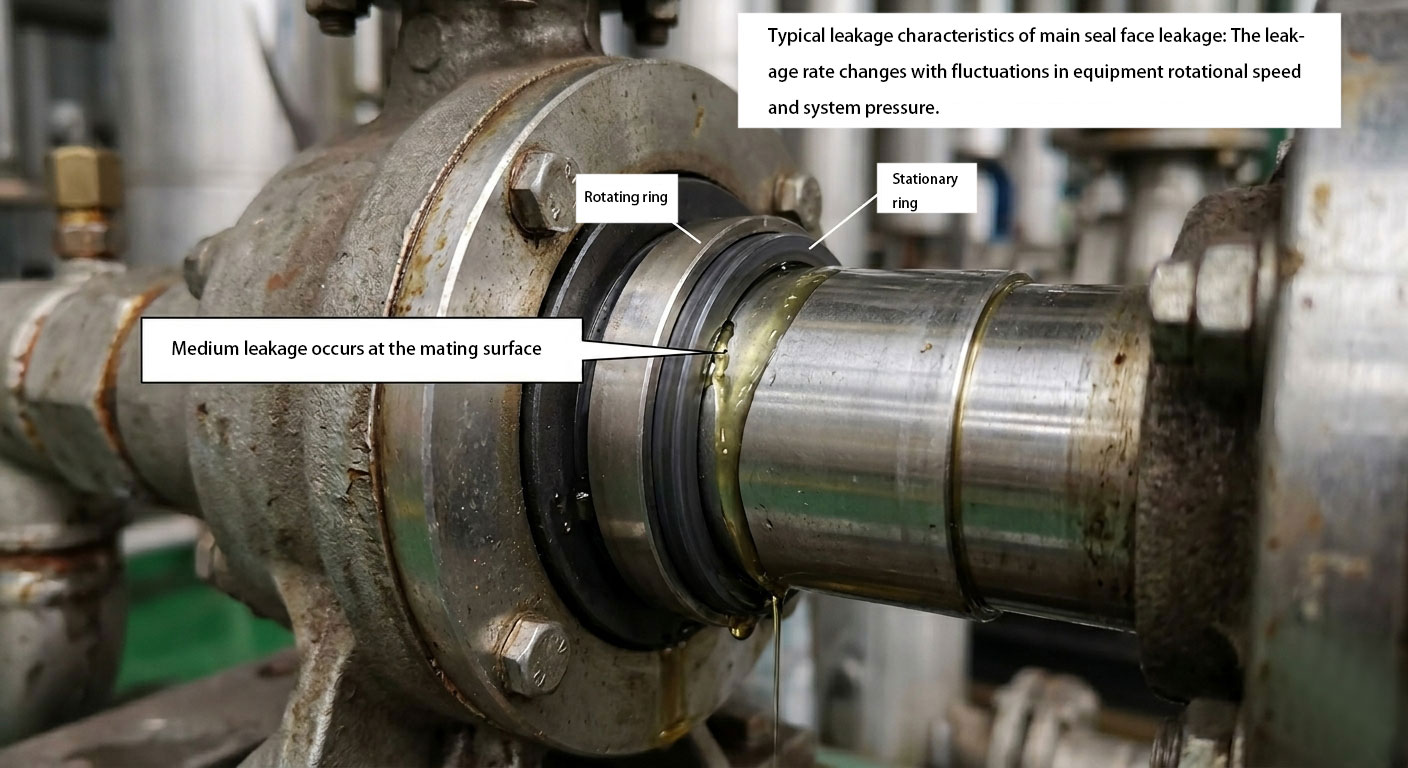
Typical Leakage Characteristics: The leakage rate changes with the fluctuation of equipment speed and system pressure. The leakage phenomenon is more obvious during the equipment start-up phase, and may ease slightly after running for a period of time under some working conditions, or continuous dripping and jet leakage may occur. The medium flows outward along the shaft sleeve, and the medium leakage trace on the fitting surface of the rotating and stationary rings can be observed intuitively.
| Core Cause Summary | Detailed Explanation |
| Seal Face Wear and Scratches | Solid particles in the medium or long-term continuous operation cause wear, scratches and gaps on the seal face, leading to complete failure of the fitting tightness of the end face and inability to form a closed seal pair. |
| End Face Dry Friction Ablation | Dry operation of the equipment or failure to put the flushing and cooling system into normal use results in the inability to form a stable lubricating film on the seal face. Continuous dry friction causes thermal deformation and carbonization ablation of the end face, damaging the flatness of the seal face. |
| End Face Specific Pressure Imbalance | Excessive or insufficient compression of elastic elements, or jamming failure of springs/bellows, leads to abnormal fitting pressure of the rotating and stationary ring end faces, failure to reach the standard seal specific pressure, and loss of effective sealing capacity. |
| Seal Face Crystallization and Adhesion | Crystallization and adhesion of easily crystallizable and highly viscous media on the seal face after the equipment is shut down. External force tears the seal face forcefully when the equipment is restarted, directly damaging the integrity of the seal face and causing leakage. |
| Core Inspection Step | Detailed Operation Specifications |
| Leakage Source Location and Tracing | After the equipment is shut down and depressurized and the site is cleaned, remove the medium stains outside the seal, trace the leakage trace one by one, and clearly confirm that the leakage source is the fitting contact surface of the rotating and stationary rings. |
| Abnormal Working Condition Verification | Retrieve and verify the equipment operation log and on-site working condition records, and check for various abnormal operation conditions such as dry operation, shutdown of the flushing system, and solid particles in the medium. |
| Seal Face Visual Inspection | Standardly disassemble the seal gland, strictly prohibit prying the rotating and stationary ring components forcefully, and visually inspect the seal face for scratches, blackening due to ablation, gaps and other organic defects. |
| Elastic Element and Compression Detection | Manually test the reset performance of elastic elements such as springs and bellows, check the seal compression parameters one by one, and confirm whether they meet the design standard range. |
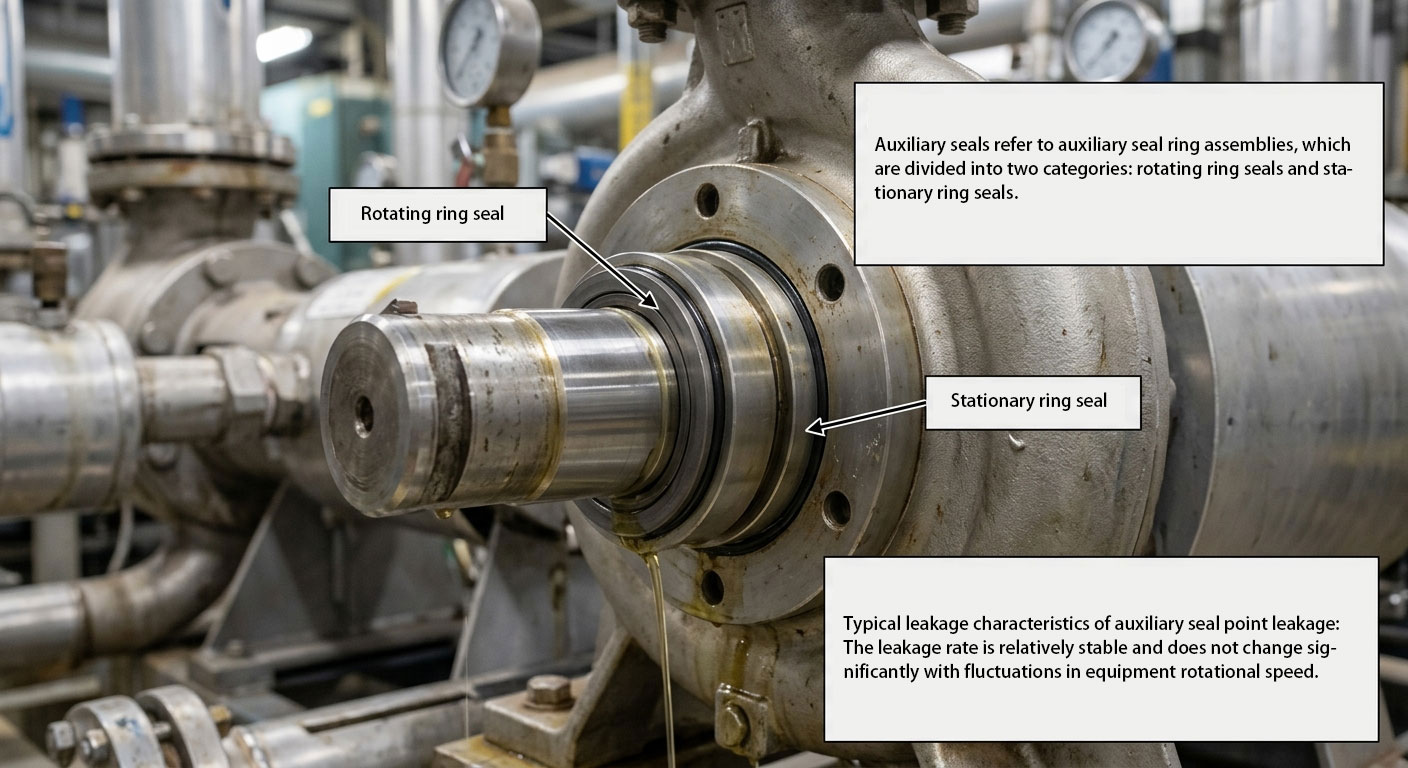
Typical Leakage Characteristics: The leakage rate is relatively stable and does not change significantly with the fluctuation of equipment speed. The medium seeps out from the inner side of the gland and the root of the shaft sleeve, not from the fitting surface of the rotating and stationary rings. It is mostly slow seepage without jet leakage. After long-term operation, medium drying and corrosion traces will remain at the seal ring.
| Core Cause Summary | Detailed Explanation |
| Insufficient Material Compatibility | The material of the seal ring is incompatible with the transported medium and working temperature. After long-term operation, problems such as swelling, hardening, brittleness and corrosion aging occur, directly losing the sealing performance. |
| Installation Operation Damage | Forcible extrusion and scratching of the seal ring body during installation, or distortion and misalignment of the seal ring, which is not fully embedded into the corresponding seal groove, forming a leakage gap. |
| Overdue Aging Failure | The seal ring operates beyond its service life. High temperature and corrosive working conditions accelerate the performance attenuation of the material, losing the elasticity and airtightness required for sealing. |
| Insufficient Seal Groove Cleanliness | Medium crystallization, rust and solid impurities remain in the seal groove, resulting in the inability of the seal ring to fit closely with the groove surface, and local gaps causing slow seepage. |
| Core Inspection Step | Detailed Operation Specifications |
| Leakage Point Distinction and Judgment | Locate the specific leakage position, distinguish the leakage characteristics of the inner side of the gland and the root of the shaft sleeve, and completely rule out the possibility of primary seal face leakage. |
| Seal Ring Visual Inspection | Visually inspect the overall appearance of the exposed seal ring, and check for obvious failure signs such as cracks, deformation, swelling, brittleness and corrosion. |
| Seal Groove Cleaning and Verification | Thoroughly clean the residual impurities in the seal groove, check the flatness and cleanliness of the groove surface, and confirm that the seal ring is installed flat without distortion or misalignment. |
| Material and Model Compatibility Verification | Verify the material and model parameters of the seal ring, confirm that it is compatible with the current medium characteristics and working temperature, and rule out the problem of improper material selection. |
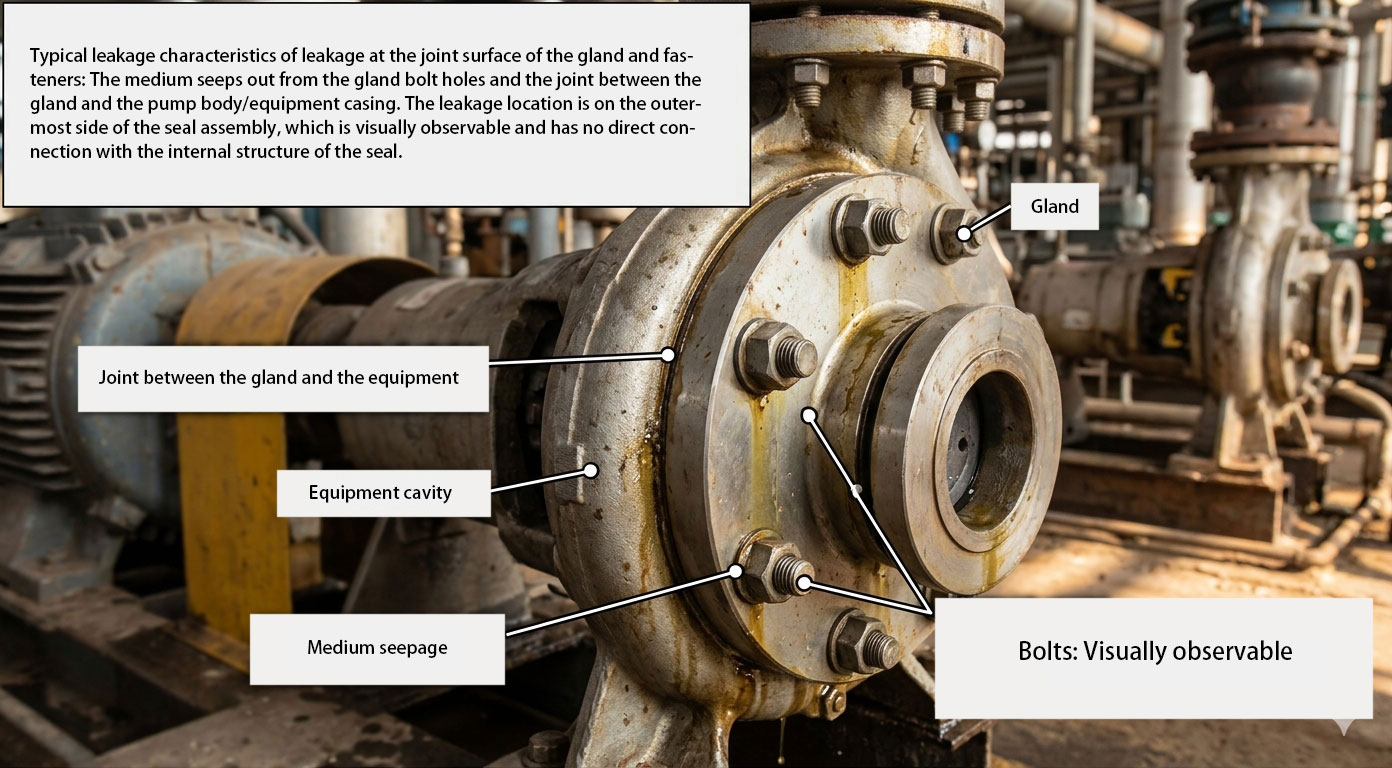
Typical Leakage Characteristics: The medium seeps out from the gland bolt holes and the joint between the gland and the pump body/equipment shell. The leakage position is located at the outermost side of the seal assembly, which is intuitively visible and has no direct connection with the internal structure of the seal.
| Core Cause Summary | Detailed Explanation |
| Bolt Fastening Failure | The gland bolts are not tightened uniformly diagonally, or the bolts become loose due to long-term equipment vibration, resulting in excessive gap at the gland joint and causing medium leakage. |
| Seal Gasket Defects | The gland seal gasket is aged, damaged, misaligned, or the gasket material selection does not meet the on-site working conditions, failing to play the role of joint sealing. |
| Gland Body Deformation | Forcible installation in violation of regulations or external impact causes deformation of the gland body, resulting in insufficient fit between the gland and the equipment joint surface and forming a permanent leakage gap. |
| Core Inspection Step | Detailed Operation Specifications |
| External Leakage Point Observation | Visually observe the leakage point through appearance, and confirm that the leakage position is on the outer side of the gland, at the bolt position or at the joint between the gland and the equipment shell. |
| Gland Bolt Fastening Inspection | Check the fastening status of the gland bolts one by one, tighten them uniformly using the diagonal fastening process, and strictly prohibit forced tightening of a single bolt to prevent the gland from being deformed by force. |
| Seal Gasket Integrity Verification | Comprehensively verify the integrity of the gland seal gasket, confirm that the gasket is not damaged or exposed, and that the material and model are compatible with the current working conditions. |
Safe Shutdown: Cut off the equipment power supply, complete system depressurization and medium emptying, and do a good job in personal protection and on-site safety control;
Trace Tracing: Clean the on-site stains, locate the leakage source along the medium leakage trace, and divide the corresponding leakage parts;
Hierarchical Inspection: In the order from outside to inside, first check the gland and fastener joint surface, then check the secondary seal points, and then detect the primary seal face;
Standardized Disposal: Conduct special replacement disposal for minor faults (bolt loosening, gasket aging, seal ring failure); if the primary seal pair is seriously damaged, contact professional and technical personnel to replace the matching seal assembly.