
Views: 0 Author: Site Editor Publish Time: 2026-01-07 Origin: Site


A Mechanical Seal is one of the most important yet often misunderstood components in modern industrial equipment. Across countless sectors—from chemical processing to water treatment, power generation to petrochemical industries—the Mechanical Seal plays a vital role in preventing fluid leakage, reducing environmental impact, and improving operational efficiency. With the global Mechanical Seal market poised for significant growth and technological evolution, understanding what a Mechanical Seal is, how it works, and why it matters is essential for engineers, purchasers, and decision‑makers alike.
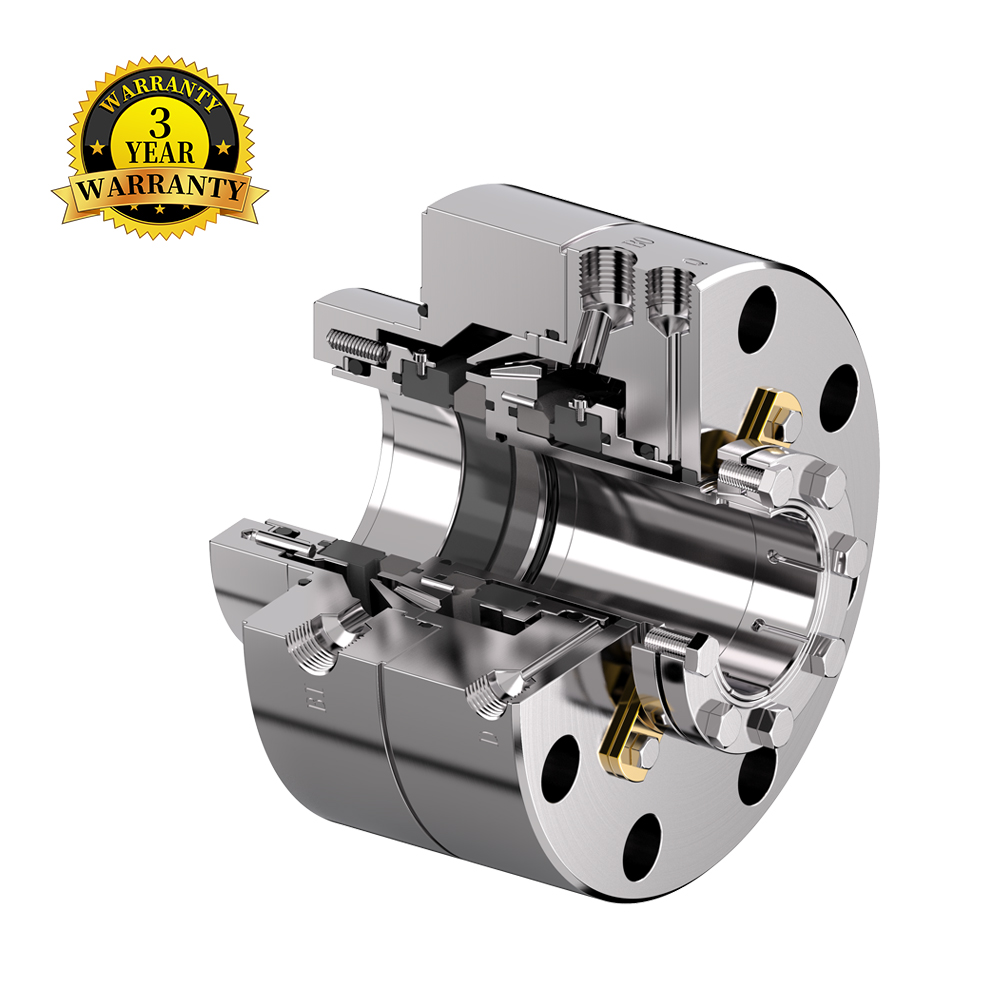
A Mechanical Seal is a precision‑engineered device used to contain fluids (liquids or gases) where a rotating shaft passes through a stationary housing. In simple terms, when equipment such as pumps, compressors, mixers, turbines, or agitators operate, they often involve a rotating shaft entering or exiting a fluid zone. Without a proper Mechanical Seal in place, pressurized fluid will leak out along the shaft, reducing efficiency and posing safety risks.
Leak Prevention: A Mechanical Seal prevents fluid leakage, which is critical to maintain the performance and safety of rotating equipment.
Environmental Compliance: Proper sealing helps equipment meet environmental and safety regulations.
Energy Efficiency: Reduces energy loss by maintaining system integrity.
Extended Equipment Life: Minimizes wear and tear caused by fluid leakage and corrosion.
At its core, a Mechanical Seal consists of two flat sealing faces—one attached to the rotating shaft, the other to the stationary housing—pressed together by springs or other mechanical forces. Tight contact between these faces creates a seal that prevents fluid from escaping. This basic concept may seem simple, but the engineering behind a Mechanical Seal is both sophisticated and critical to its performance.
A Mechanical Seal is a dynamic sealing element whose function is to prevent fluid leakage between two elements in relative motion (typically a rotating shaft and a stationary housing).
To fully understand how a Mechanical Seal works, it’s important to recognize its core components:
| Component | Purpose |
|---|---|
| Seal Ring (Primary Seal Face) | Interface that directly blocks fluid leakage |
| Mating Ring | Works with the seal ring to form the sealing interface |
| Spring | Applies mechanical force to maintain contact |
| Secondary Sealing Elements (Gasket/O‑rings) | Prevent fluid intrusion outside of the main seal faces |
| Housing/Casing | Holds the seal structure in place |
The basic motion within a Mechanical Seal involves two key surfaces:
Rotating Face: Connected to the shaft; turns at the same speed as the equipment.
Stationary Face: Fixed to the housing; does not rotate.
The tight interface between these two faces creates a barrier that stops fluid from leaking outwards, even under high pressure and temperature. Springs, bellows, or fluid pressure itself helps keep the faces in close, consistent contact.
Mechanical seals come in many different types, each suited for particular applications and operating conditions. Here are the most common categories:
Basic design with separate seal elements
Highly customizable for specific applications
Widely used in industrial pumps
Pre‑assembled units that simplify installation
Reduces installation errors and downtime
Increasingly popular in modern systems due to ease of maintenance and reliability
Compact, integrated design
Best for space‑limited installations
A type of Mechanical Seal particularly used in gas compressors
Non‑contact design reduces wear and heat generation
Incorporates grooves that generate a fluid film to reduce friction
Ideal for high‑speed rotating equipment
Understanding the Mechanical Seal landscape means also understanding current market trends and forecasts. The global Mechanical Seal market is experiencing steady growth due to increasing demand across multiple industrial sectors.
| Year | Market Value (USD Billion) | Notes |
|---|---|---|
| 2018 | 3.20 | Baseline global market value |
| 2023 | 3.50 | Recent market approximate |
| 2024 | 5.64 | Market size estimate from recent report |
| 2032 | ~6.92 | Projected market size |
| 2035 | ~8.73 | Strategic forecast with CAGR ~4.04% |
Cartridge Seals Growing Fastest: Due to easy installation and reduced maintenance costs
Asia‑Pacific Industrialization: Rapid industrial growth fuels Mechanical Seal demand
Smart & IoT‑Enabled Seals: Next‑gen mechanical seals integrating sensors for predictive maintenance
Energy Efficiency Needs: Industrial focus on reduced leakage and lower operating costs
The versatility of Mechanical Seal technology allows its use in wide‑ranging industries:
Oil & Gas: Handles aggressive fluids under high pressures
Chemical Processing: Requires seals with high corrosion resistance
Water & Wastewater Treatment: Prevents contamination and leakage
Power Generation: Ensures reliable turbine and pump operations
Food & Beverage & Pharmaceutical: Meets stringent hygiene and safety standards
Each industry has unique demands for a Mechanical Seal, often involving tailored materials and specific design configurations.
Understanding how a Mechanical Seal compares to older sealing methods helps illustrate its benefits:
| Feature | Mechanical Seal | Traditional Packing |
|---|---|---|
| Leak Prevention | Excellent | Moderate |
| Maintenance Frequency | Low | High |
| Operational Efficiency | High | Lower |
| Installation Complexity | Moderate to High | Low |
| Service Life | Long | Shorter |
Mechanical Seal technology generally outperforms traditional packing due to more reliable sealing and lower long‑term maintenance costs.
Material choice determines a Mechanical Seal’s suitability for specific environments:
| Material | Benefits |
|---|---|
| Carbon | Strong wear resistance |
| Graphite | Excellent lubrication properties |
| Ceramic | High heat tolerance |
| Metal | Robust for challenging conditions |
Choosing the right material combination is essential to maximizing Mechanical Seal performance and longevity.
Proper installation and maintenance are crucial for optimal Mechanical Seal performance. Incorrect installation can lead to premature failure, leakage, or system downtime.
Follow manufacturer instructions precisely
Ensure surface cleanliness
Monitor for signs of leakage or overheating
Use condition monitoring where possible
The Mechanical Seal industry is rapidly evolving. Below are key technological trends:
Integration of sensors into Mechanical Seals allows real‑time monitoring of parameters such as temperature, vibration, and leakage. This drives predictive maintenance and reduces unplanned downtime.
Modern mechanical seals are engineered to reduce friction and fluid loss, contributing to lower energy consumption in industrial systems.
Environmental concerns are pushing manufacturers to develop seals that minimize leaks and reduce waste throughout a seal’s lifecycle.
As The Pioneering Specialist in Cartridge Mechanical Seals (China), FBU delivers expert Mechanical Seal solutions with 18+ years of experience in cartridge seal design and customization. We serve industrial customers with tailored, high‑value sealing solutions that ensure safety, reliability, and cost performance. Whether you need advanced Mechanical Seal solutions or custom engineering support, FBU is committed to your success.
Factors include fluid type, pressure, temperature, shaft speed, and installation environment. Choosing the right Mechanical Seal type and material combination ensures long‑term reliability.
Common causes of failure include incorrect installation, abrasive fluid particles, thermal shock, vibration, and lack of lubrication between sealing faces.
Dry gas seals excel in high‑speed, low‑friction applications such as compressors, while wet seals are ideal for liquid containment in pumps.
Routine checks for leakage, monitoring of seal face wear, and replacement of worn components help maintain Mechanical Seal longevity.
Smart sensors provide early warnings for temperature, vibration, and leakage anomalies, enabling predictive maintenance and lowering unplanned downtimes.