
Views: 0 Author: Site Editor Publish Time: 2026-03-24 Origin: Site


In the world of rotating equipment—centrifugal pumps, compressors, and agitators—the mechanical seal is often regarded as a "black box." While it is frequently the primary cause of unscheduled downtime, its underlying engineering logic is both elegant and straightforward.
For reliability engineers and plant managers, understanding the core anatomy and functional logic of a mechanical seal is not just academic; it is the prerequisite for extending Mean Time Between Failure (MTBF) and ensuring environmental compliance.
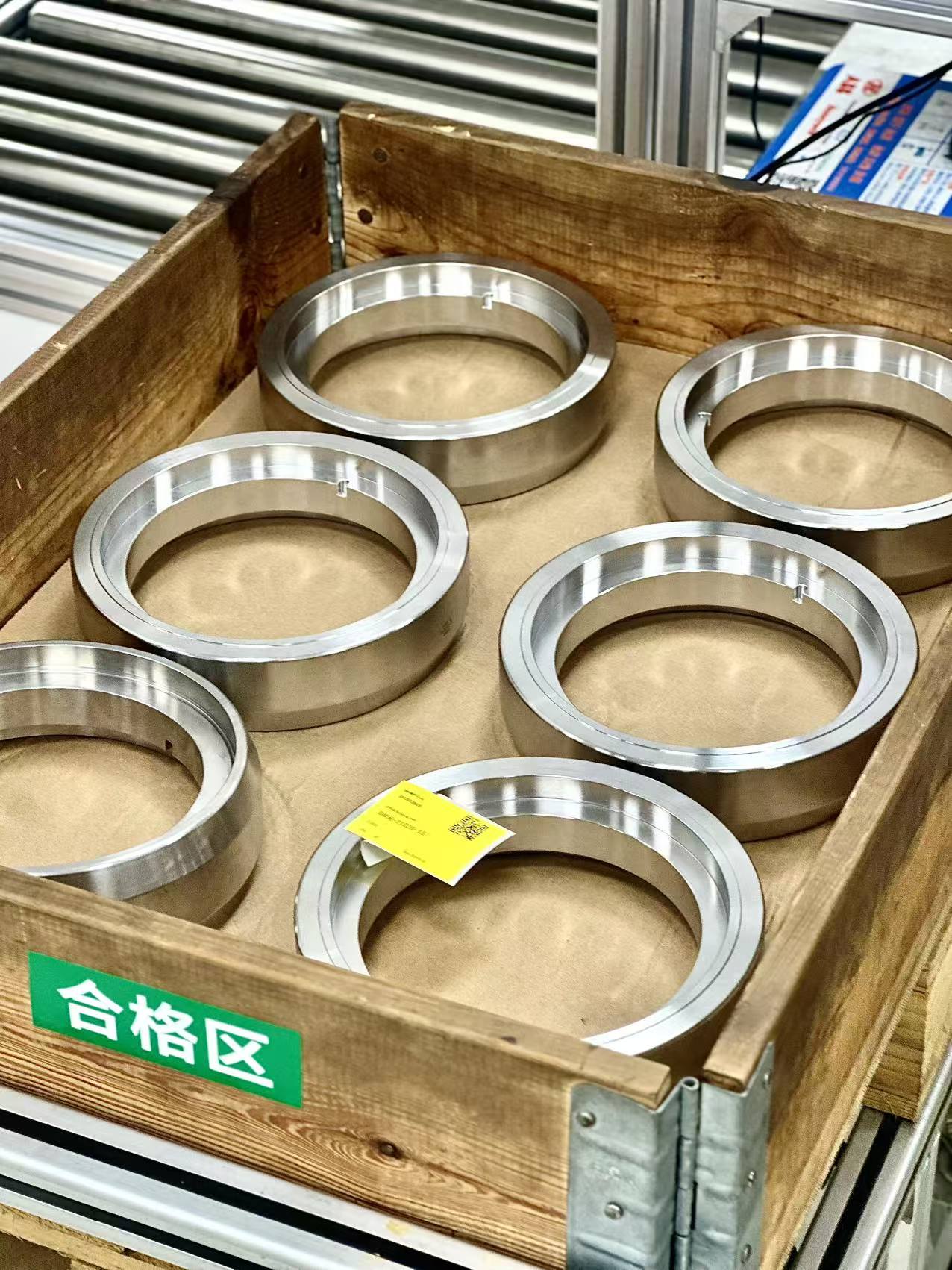
The fundamental objective of a mechanical seal is to prevent a pressurized fluid from escaping along a rotating shaft. Unlike traditional gland packing, which relies on friction and controlled leakage, the mechanical seal operates on the principle of a microscopic fluid film.
The "magic" happens at the interface of two incredibly flat surfaces: one rotating and one stationary. To achieve a leak-free operation, these faces must maintain a separation distance typically measured in micrometers ($\mu \text{m}$).
If the gap is too wide: The seal leaks.
If the gap is too narrow: The fluid film collapses, leading to friction, heat, and catastrophic face failure.
Successfully managing this gap requires the synchronized performance of four distinct sealing points within the assembly.
The heart of the seal consists of the Rotating Ring and the Stationary Ring. These components form the primary sealing pair.
The Material Science: One face is typically made of a "soft" lubricating material (like Carbon-Graphite), while the other is a "hard" material (like Silicon Carbide or Tungsten Carbide). This combination reduces friction and wear.
Surface Flatness: To maintain the fluid film, the faces are lapped to a flatness within 2 to 3 light bands (less than $1\mu \text{m}$). Any distortion here, whether from thermal stress or improper installation, results in immediate leakage.

A mechanical seal is not a rigid structure. Rotating shafts experience axial float, vibration, and thermal expansion. The Elastic Elements—usually single springs, multiple small springs, or metal bellows—perform two critical functions:
Initial Loading: They provide the "closing force" required to keep the faces in contact before the equipment is pressurized.
Dynamic Tracking: They allow the rotating face to "float" and follow the stationary face, compensating for any shaft misalignment or movement during operation.
While the faces handle the rotating interface, Secondary Seals (O-rings, V-rings, or Wedges) prevent leakage through the internal paths of the seal assembly.
Stationary Secondary Seal: Seals the stationary ring to the gland plate. Since there is no movement, this is a standard static seal.
Dynamic Secondary Seal: Seals the rotating ring to the shaft or sleeve. This is the "achilles heel" of many designs. As the faces wear, this seal must slide axially. If the O-ring becomes "hung up" due to chemical swelling or debris (a phenomenon known as hang-up), the elastic elements cannot compensate, and the faces will open.
The internal components are housed and protected by the Gland Plate and often mounted on a Sleeve.
The Gland: Acts as the interface between the seal and the pump stuffing box. It often contains "ports" for flushing, cooling, or quenching (API Piping Plans), which are essential for maintaining the environment around the fluid film.
The Sleeve: Protects the pump shaft from corrosion and wear, allowing the seal to be built as a "cartridge" for easier installation and setting.
A mechanical seal fails when its balance of forces is disrupted. Whether it is a chemical attack on an O-ring, a pressure surge that overcomes the spring force, or a loss of lubrication that vaporizes the fluid film, the result is the same: the barrier is breached.
| Component | Primary Function | Failure Mode Impact |
| Seal Faces | Create the primary barrier | Leakage, "Popping," or Wear |
| Elastic Elements | Maintain face contact/compensation | Face opening, Hang-up |
| Secondary Seals | Prevent internal bypass | Chemical swelling, Extrusion |
| Gland/Sleeve | Structural support & Environment | Misalignment, Corrosion |
Understanding these components transitions the conversation from "the seal is leaking" to "why is the fluid film failing?" This shift in perspective is the hallmark of a sophisticated maintenance strategy and the key to long-term equipment reliability.
Technical Note: For high-pressure or hazardous applications, specific configurations such as Dual Pressurized (API Plan 53) or Non-Contacting Gas Seals may be required to provide redundant layers of protection.