
Views: 0 Author: Site Editor Publish Time: 2026-03-21 Origin: Site


| Challenge Category | Core Background & Trigger Factors | Direct Operational Impact | Mandatory Operational Requirements |
| I. Zero-Tolerance Uptime Margin ($110 Oil Environment) | Brent Crude prices surging to ~$110/barrel due to Middle East geopolitical tensions; historic high raw material costs amplifying revenue pressure. | Single failures in crude transfer pumps or FCC units cause hourly losses of tens of thousands to millions of dollars; outdated "run-to-fail" maintenance models are financially catastrophic. | Prioritize sealing solutions exceeding API 682 standards; maximize Mean Time Between Failure (MTBF); eliminate unplanned downtime entirely. |
| II. Global Supply Chain Resilience Gaps | Geopolitical "hot zones" disrupting Western sealing major operations; extended lead times, soaring war-risk insurance premiums, and critical part shortages. | Production delays, inventory stockouts, and inability to source replacement parts quickly; over-reliance on single-region suppliers poses existential operational risk. | Establish reliable "Second Source" supply chains; partner with stable producers outside geopolitical sensitive areas; access seamless Tier-1 brand alternatives. |
| III. Feedstock Compatibility Crisis (Changing Crude Types) | Maritime blockades forcing refineries to switch to non-traditional crude (high-sulfur, high-TAN, and other complex feedstocks); sudden unplanned feedstock shifts. | Extreme corrosion and wear on seal face materials, O-rings, and flushing systems (Plan 32/53B); existing sealing setups fail to adapt to new feedstock properties. | Conduct full technical audits & diagnostics for seal compatibility; deploy corrosion-resistant sealing components; optimize flushing plans for harsh feedstocks. |
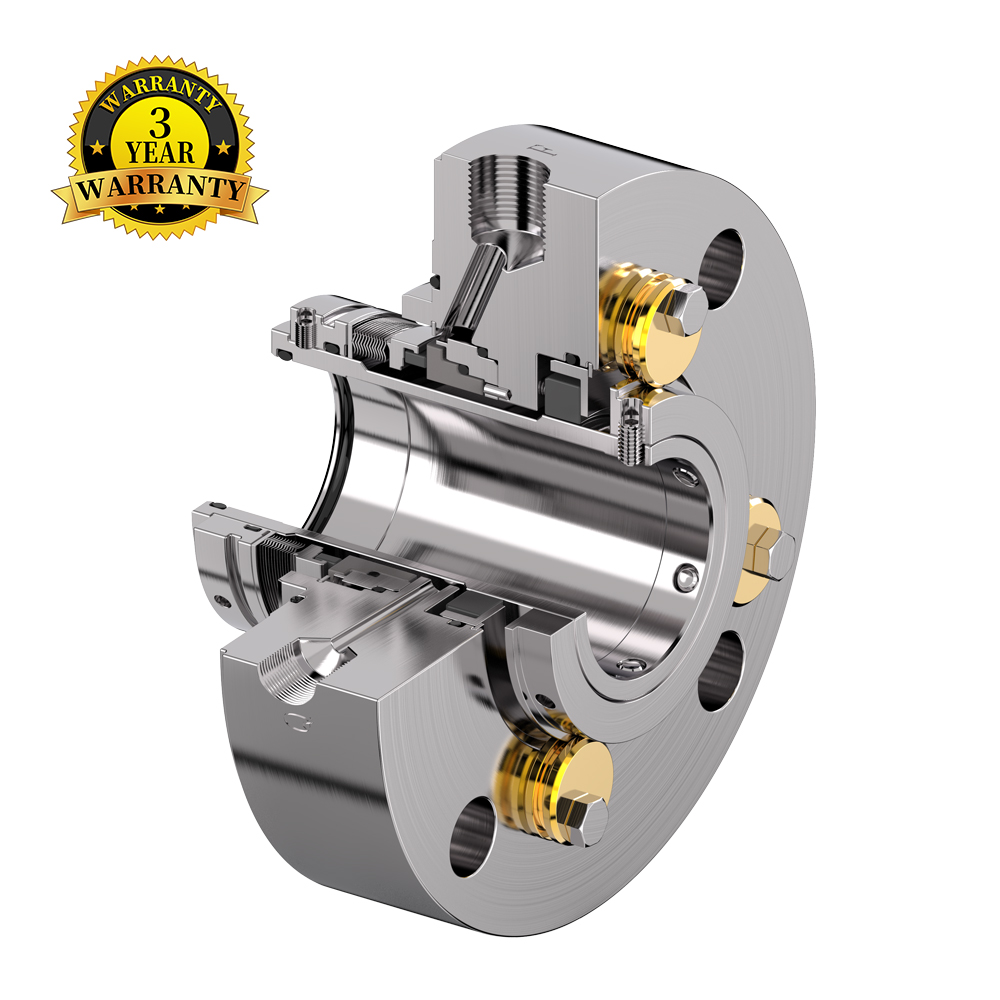
| Solution Feature | Technical Specifications & Design Details | Direct Benefit for Refinery Operations |
| Full API 682 Compliance | Engineered to meet the latest API 682 industry standards; integrated VOC emission control technology. | Guarantees top-tier safety and environmental performance; meets global regulatory requirements for refinery operations. |
| Volatility-Resistant Material Design | Specialized face-pairing (SSiC, WC, Carbon); high-performance elastomers (Kalrez®, premium Viton) for harsh crude compatibility. | Withstands corrosion and wear from high-sulfur, high-TAN, and non-traditional feedstocks; eliminates material-related seal failures. |
| Pre-Assembled Cartridge Design | Fully pre-assembled cartridge construction for plug-and-play installation. | Eliminates human installation errors; cuts maintenance turnaround time; ensures consistent reliability even during rapid repairs. |
| Advanced Optimized Flushing Plans | Integrated with API-standard optimized flushing plans (compatible with Plan 32, Plan 53B and other critical configurations). | Controls seal-face temperatures effectively; prevents thermal damage during high-load continuous operations; extends MTBF significantly. |
In the uncertainty of 2026, mechanical seals are no longer just consumables; they are the "fuses" of energy security. Through proactive technical upgrades, strict adherence to API standards, and expert-level diagnostic services, FBU helps refineries protect their most vital asset: continuous production.
Q1: How does "Seal Face Heat Generation" impact the MTBF of pump seals in light hydrocarbon service?
A: In light hydrocarbon services (like Propane or Butane), the vapor pressure margin is slim. Excessive heat at the seal faces can cause the fluid to "flash" into vapor, leading to dry running and face scoring. To optimize MTBF, we implement API Plan 11 or 31 to increase stuffing box pressure and provide cooling, ensuring the fluid remains in a stable liquid phase across the seal faces.
Q2: What are the primary causes of "Coking" in heavy oil seals, and how can it be prevented?
A: Coking occurs when heavy hydrocarbons reach their oxidation temperature at the atmospheric side of the seal, leaving behind hard carbon deposits that hang up the seal bellows or springs. The most effective mitigation is utilizing API Plan 62 (Steam Quench) to keep the atmospheric side clean, or upgrading to a Metal Bellows Seal which is more resilient to high-temperature buildup than pusher-type seals.